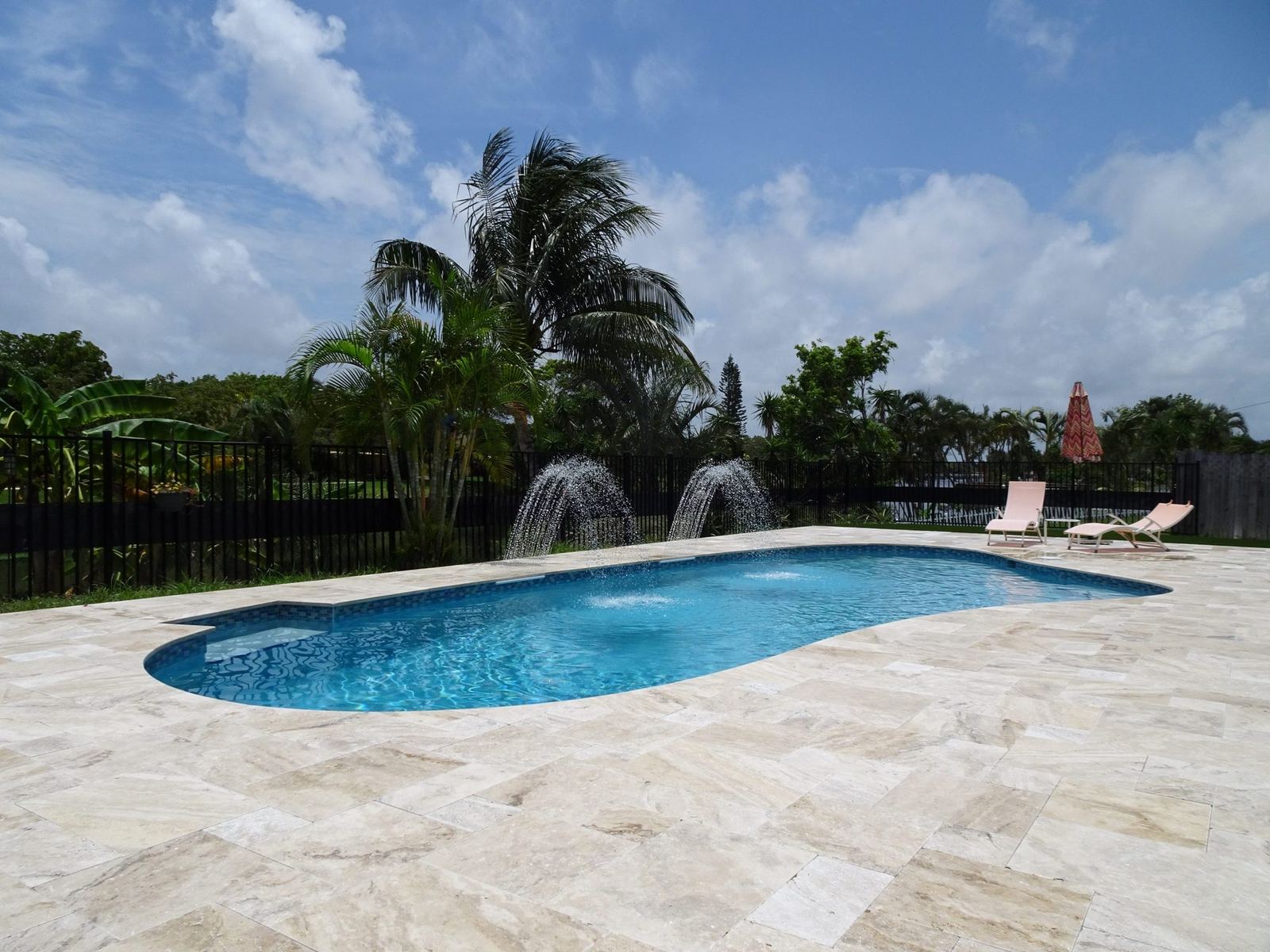
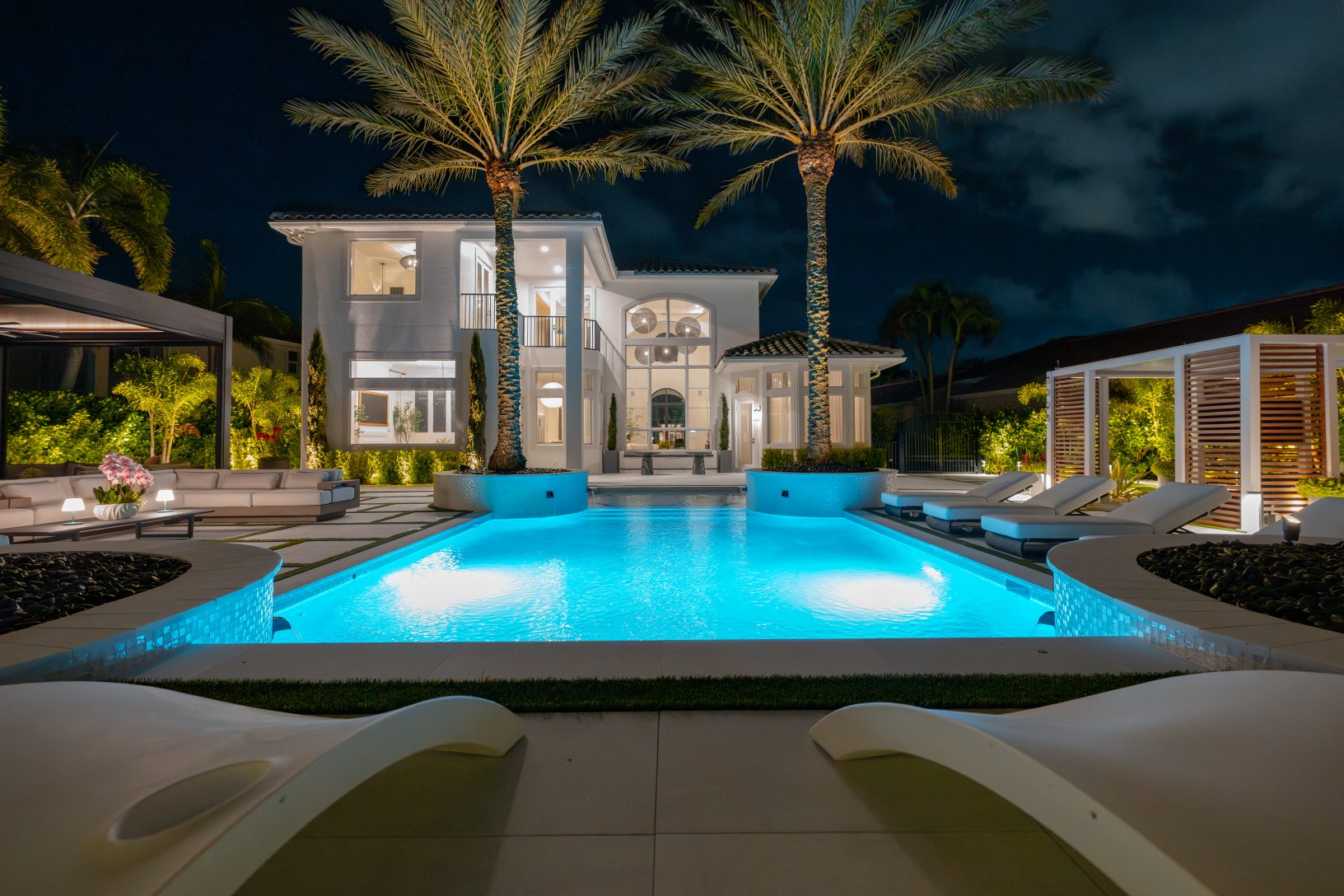
Remodeling a pool is the fastest way to make an older South Florida home feel new again - usually at 20-30% of the cost of tearing out and starting over. But the choices you make on four items - interior finish, waterline tile, coping, and deck surface - will decide whether your remodel looks great on day one only, or still looks great a decade in.
The other thing to know: if the pool is being drained anyway, this is the cheapest moment in the entire life of your backyard to also refresh the deck, the pergola, and any equipment nearing end-of-life. Doing them together saves on mobilization, permits, and the inevitable 'while you're here, can you also…' change orders down the road.
Match the interior finish to your water
Standard white plaster is the budget-friendly choice, but it is also the most sensitive to water chemistry. In South Florida, strong sun burns off chlorine quickly and heavy summer rain keeps diluting the water. Plaster that is not carefully balanced in its first weeks can etch, stain, or turn blotchy.
Pebble and quartz finishes cost more up front, but they tend to be tougher and more forgiving of those swings. Pebble can feel rougher underfoot, so touch a large sample before you commit. Look at samples wet, too, because color shifts a lot underwater and in bright sun.
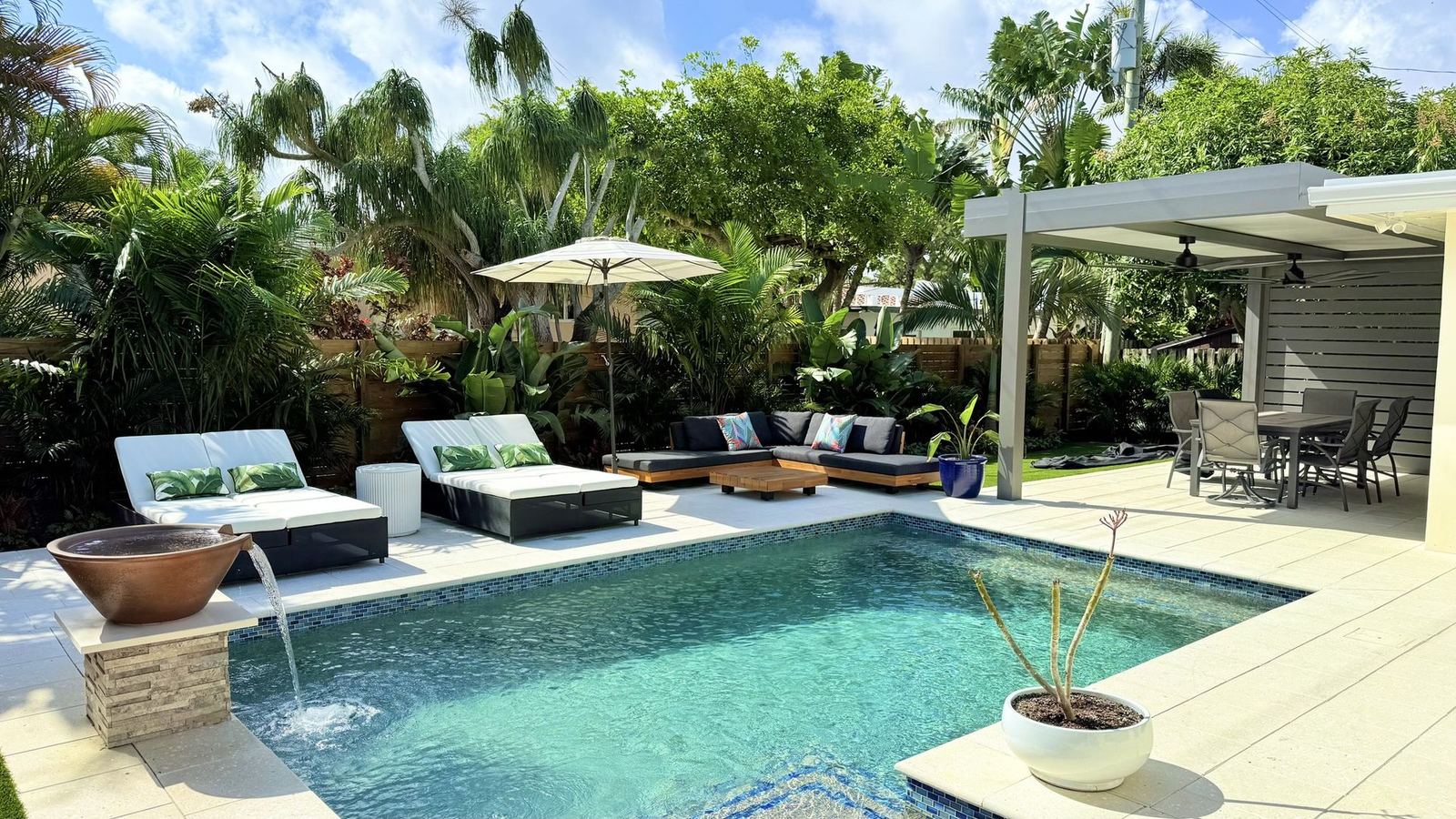
Tile and coping take the most abuse
The waterline is where sunscreen oils, minerals, and algae collect, so choose tile that is easy to scrub. Glazed porcelain and glass are both smooth and durable. Highly textured tile looks great in a showroom but holds onto scum.
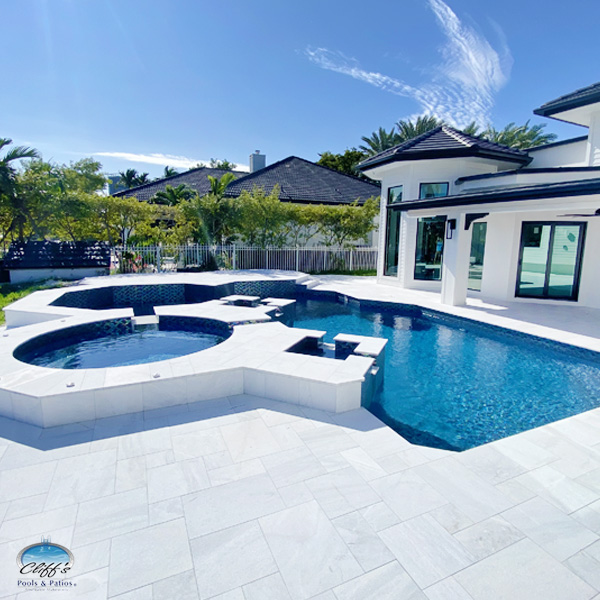
Coping is the edge you grip, sit on, and walk across barefoot, so surface temperature matters. Light-colored travertine and pavers stay noticeably cooler in afternoon sun than dark stone. Salt air and constant wet-dry cycles are hard on poorly sealed coping, so ask what sealer is used and how often it should be reapplied.
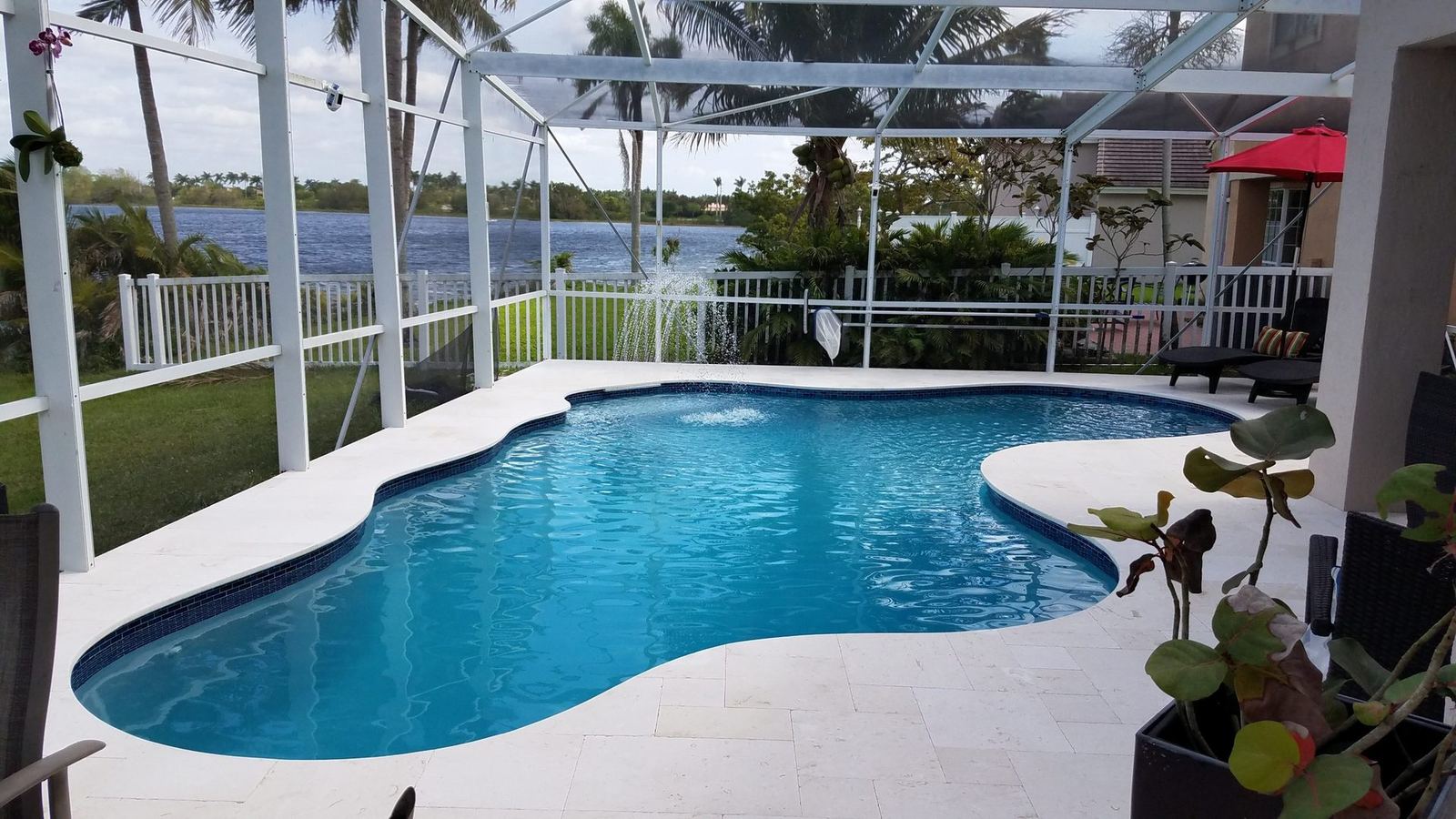
Choose decking for heat, grip, and drainage
A deck that looks beautiful but burns your feet in July will not get used. Test any material in direct sun before you order it, not in the shade of a showroom. Pavers, travertine, and cool-touch coatings can all work, but they behave very differently.
Drainage matters just as much. A South Florida downpour can drop a lot of water in minutes, so the deck should slope away from the house and pool and have somewhere sensible to send that water. Good pavers with proper base prep also handle shifting sandy soil better than a rigid surface that is prone to cracking.
Sort out approvals and timing early
Many HOAs require sign-off on colors, materials, and any change to the footprint, and permits take their own time. Start both before you fall in love with a finish, so you do not have to redesign around a rejection.
Also think about the calendar. Hurricane season can stall schedules and make material deliveries unpredictable, so build in some slack. Before you sign, ask each contractor:
- Which finish do you recommend for my water, and why?
- How will the new finish be started up and cared for in its first weeks?
- Who handles permits and HOA paperwork?
- What is the plan if a storm interrupts the job?
- How will the deck drain during heavy rain?
A good contractor will answer these plainly. Our team at Cliff's Pools & Patios walks homeowners through these choices before any work begins.
Get a free design consultation from our South Florida team.
Every project starts with understanding how you actually use your backyard. Whether that's Sunday swims, weeknight grilling, or a putting-green escape, we size the scope to your life.